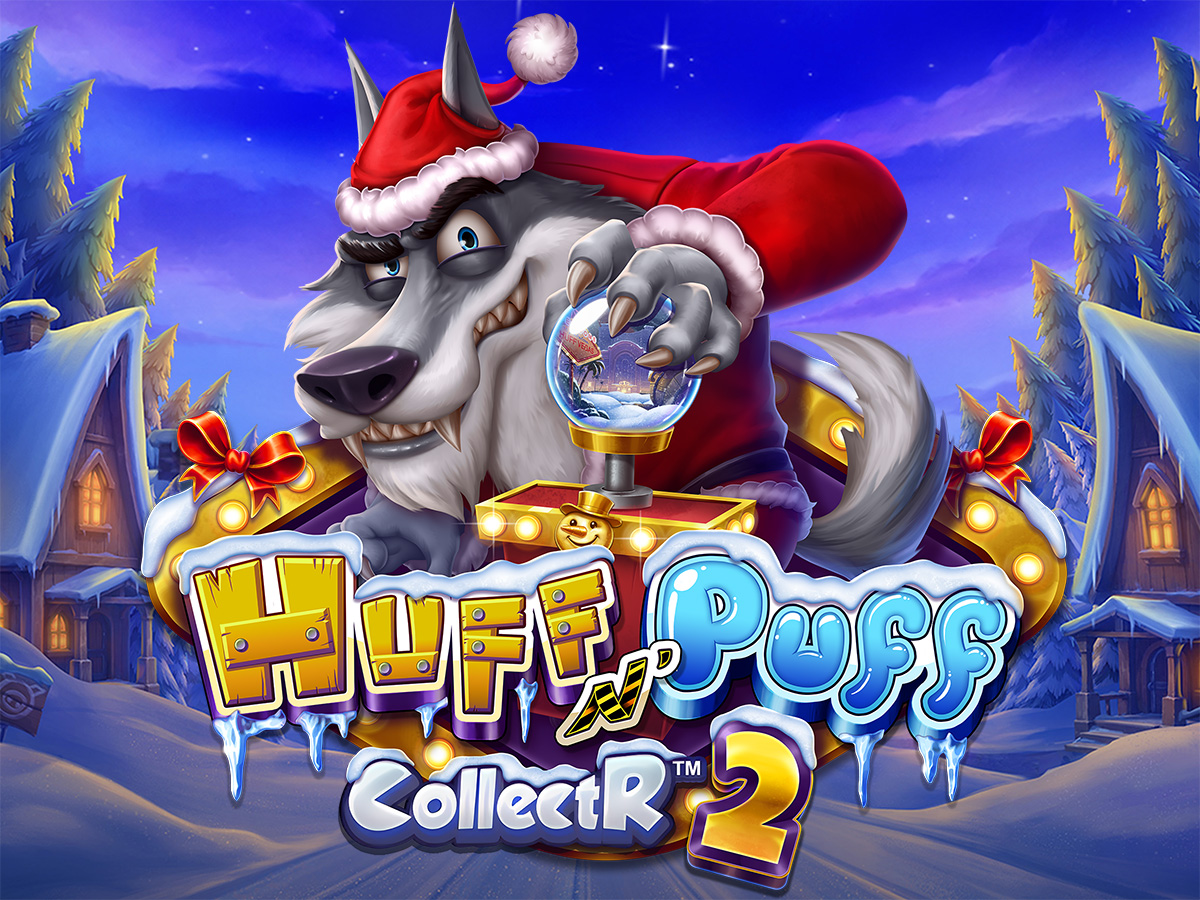
Huff N’ Puff CollectR 2 · At a glance
Upcoming: scheduled for 1 December 2026. Checked 11 November 2026 against official materials. Operator availability, selected RTP and any launch changes remain installation-specific.
| Published figure | Value or configuration |
|---|---|
| Developer | ELK Studios |
| Playing field | Expanding CollectR grid |
| Published RTP | 87.0–96.0% · market/operator configuration |
| Maximum payout | 10,000× bet |
| General release | Upcoming · 1 December 2026 |
| Volatility | 7/10 · ELK product-sheet scale |
| Hit frequency | 25.8% · product-sheet hit frequency |
| Win system | CollectR · symbol collection |
Huff N’ Puff CollectR 2 · Published RTP
The product sheet specifies RTP from 87.0% to 96.0%, depending on market and operator. These are alternative configurations, not a percentage that rises as the board develops. RTP describes theoretical aggregate returns over extensive play; it cannot predict one session. A particular installation’s rules are needed to identify its selected setting.
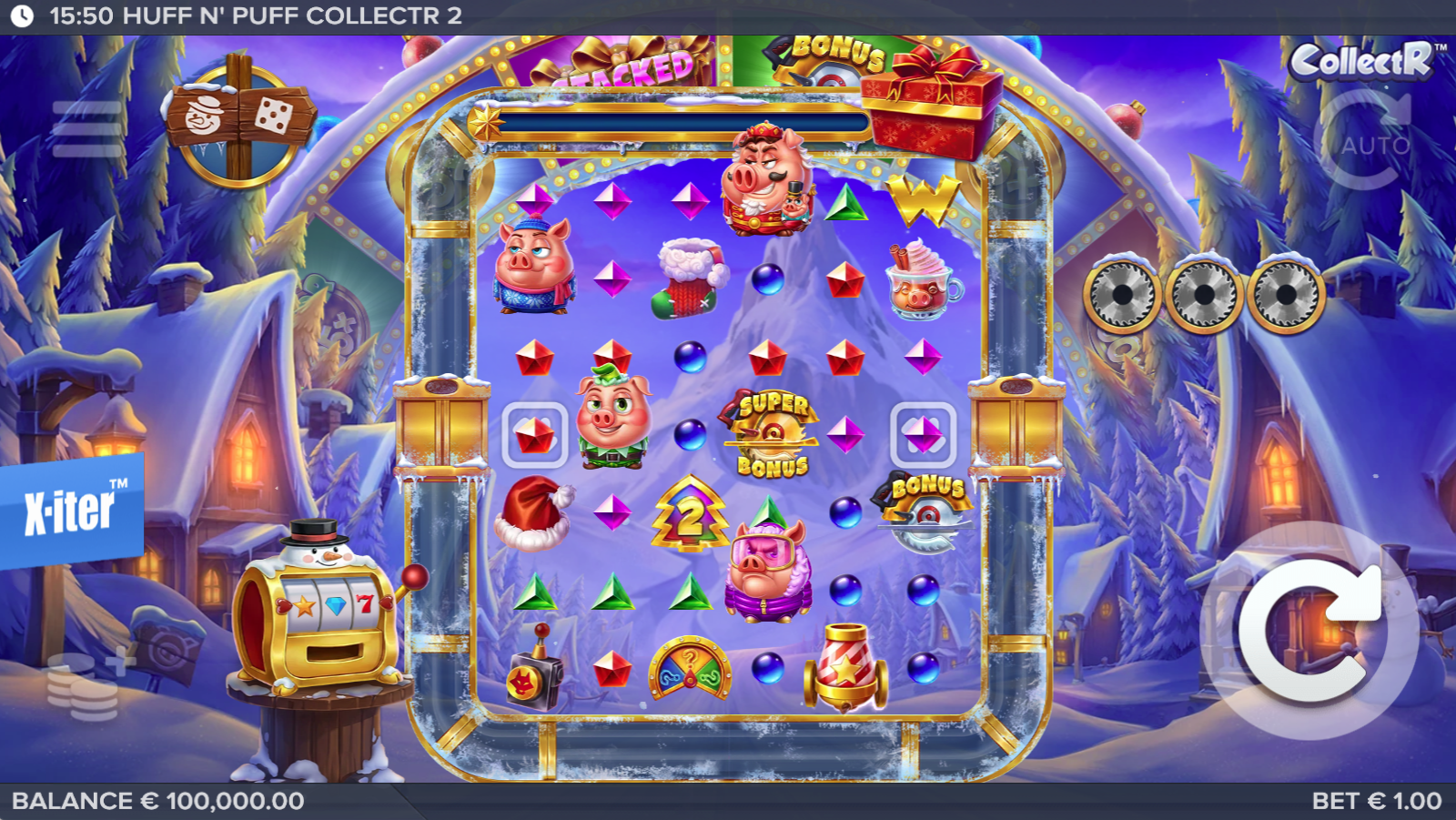
RTP & game numbers
ELK rates volatility at 7 out of 10 and lists a 25.8% hit frequency. These describe different aspects of the model. Volatility concerns the distribution of outcomes; hit frequency concerns qualifying paying events. A hit can be smaller than its associated stake, and the percentage is neither a bonus frequency nor a probability of finishing ahead.
The advertised maximum is 10,000 times the bet. That ceiling says nothing by itself about how often large outcomes occur. The product sheet does not supply the probability of reaching it, individual wheel weights or a full prize distribution. Comparing the cap, volatility and hit rate is informative only when their different meanings remain separate.
- 01
Keep the configuration attached
Write the figure together with the game edition and its source. If a developer lists more than one RTP, the range describes different configurations; it is not a meter that rises while you play. The information in the exact installed game identifies its selected configuration.
- 02
Use the correct denominator
A percentage, a multiplier and a frequency measure different things. RTP refers to aggregate stakes, a maximum-win multiplier refers to the stated bet, and hit frequency counts qualifying paying events. A feature counter is a game-state value, not another expression of RTP.
- 03
Read a ceiling as a ceiling
A maximum describes the upper boundary of the rules. It does not provide the probability of reaching that result. Likewise, a published hit frequency does not state how often a bonus appears or how often a session finishes ahead. Separate each definition before comparing games.
A simple way to read a multiplier
A 100× prize means 100 times the bet used by the rule. At an illustrative 1-unit bet, that is 100 units; at 0.20 units, it is 20 units. This example explains the notation only. It is not a forecast, a current offer or a statement that every feature uses the same bet basis.
Useful terms
- Is RTP the result I should expect from one session?
- RTP describes a theoretical long-run relationship between aggregate stakes and returns for a defined game configuration. It is not the result promised for a session and does not predict the next round. Read it with the exact game version instead of treating it as a short-term target.
- How are volatility and hit frequency different?
- Volatility describes the distribution and variation of outcomes. Hit frequency describes how often the model records a qualifying paying event. A paying event can return less than its stake. Neither figure alone specifies the frequency of a particular bonus or the probability of reaching the game’s maximum.
- Is a maximum win the same as a progressive jackpot?
- A maximum win is a ceiling defined by a game’s rules, often expressed as a multiple of a bet. A progressive jackpot is a separate prize system whose value can accumulate according to its rules. A fixed named prize, such as Mini or Grand, is not automatically progressive.
- Is an in-game bonus the same as a casino promotion?
- No. An in-game bonus is a feature governed by the slot’s own rules, such as free spins or a collection round. A casino promotion is an account-level offer with its own eligibility and conditions. The same phrase can appear in both contexts, but the activation rules and rewards are separate.
Huff N’ Puff CollectR 2 · Game features
The two principal bonus modes share a collection-based entry condition. Their defining common detail is continuity: the bonus retains grid size, collection-meter progress and gem upgrades as the round develops.
Huff N’ Puff CollectR 2 builds its action around four coloured pigs and an expanding CollectR board. Collection, construction frames and the Wolf’s reveals connect the central playfield with the prizes. The North Pole sequel develops that idea through distinct features, rather than relying on conventional rows of paylines.
Big Wheel, Slot Machine and Gift Mania give the round different destinations. Gift Mania contains three present-collecting minigames; Bonus and Super Bonus extend the board’s progression within their rounds. Track the collector, the construction stage and the active feature together to follow how each sequence develops.
- Collection, construction and prize reveals form one connected visual story.
- Grid size, collection-meter progress and gem upgrades persist during the bonus.
- The product sheet lists an RTP range, not one universal 96% setting.